Check Your Concrete Before Winter 2026
Before the freeze-thaw season hits Hartford County, walk your driveway, steps, and walkways for the early settlement signs that get worse over winter — and what to do about them.
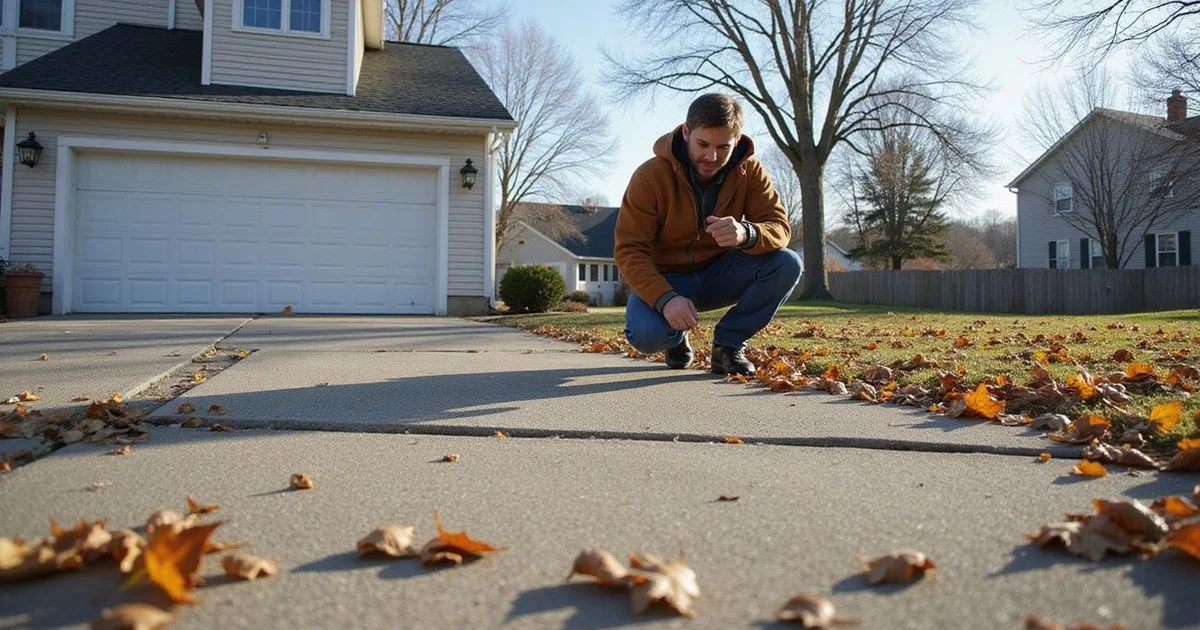
Late summer is the wrong time to think about frost, which is exactly why it’s the right time to walk your concrete. Every settlement problem we lift in spring was visible the previous autumn as something small and easy to ignore. Give it twenty minutes now and you’ll know whether you’re heading into winter with a problem that’s about to get more expensive.
Here’s what to look for, and what each thing means.
Walk the Joints First
Start with the joints: the deliberate lines between slabs, and the seam where the driveway meets the garage apron. Joints are where water gets in, and water getting in is the beginning of every settlement story in Connecticut.
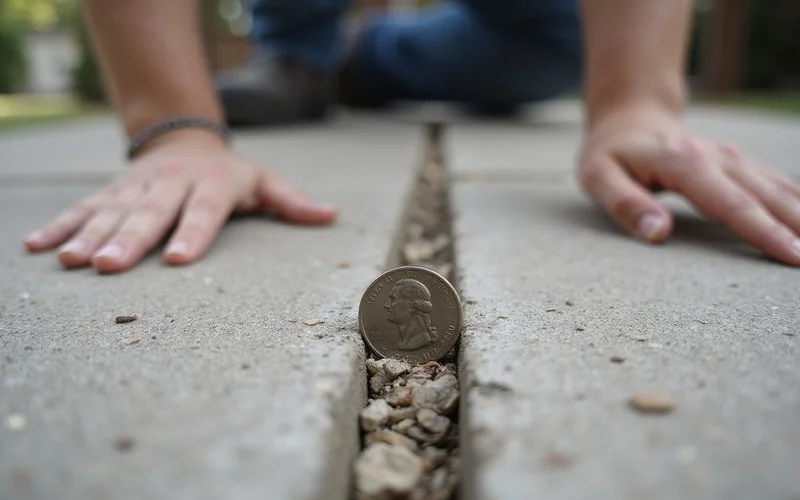
Hold a coin on edge in each joint. If it disappears, that joint has opened wider than it should be, and it is now a funnel delivering surface water straight into the base material under your slab. Over a winter, that water freezes, expands, displaces the compacted base, then thaws and carries fine material away with it. What’s left behind is a void.
Check the apron joint at the garage especially closely. That section sits on backfill, it takes concentrated roof runoff, and it drops before anything else on most properties. If there’s already a lip you can feel with your foot, that gap will be wider by March.
A useful rule of thumb
An open joint isn’t the damage. It’s the delivery system for the damage. Sealing joints in autumn is cheap; lifting a slab that dropped because they were open is not.
Look for Water Going the Wrong Way
The next check needs rain, or a hose. Run water onto the driveway and watch where it goes.
A driveway that was poured correctly sheds water away from the house. A driveway that has settled often does the opposite. The slab tips back, and now every thaw sends meltwater toward your foundation instead of down to the street. You’ll see the evidence as a persistent damp patch, a puddle that outlives the rest of the drying surface, or a stain line along the foundation.
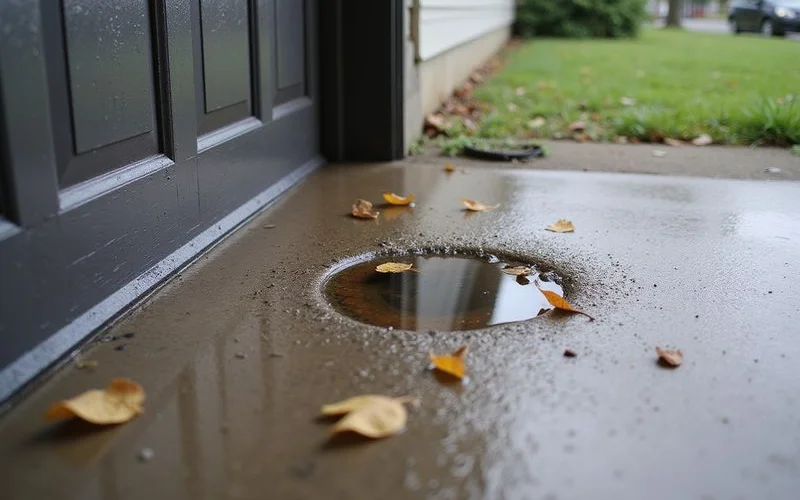
This is the one worth acting on before winter rather than after. Water pooling at a threshold or foundation through a Connecticut freeze-thaw season does more than sit there. It works into the base, freezes, and enlarges the void that caused the tilt in the first place.
The Four Autumn Checks
| Check | What you’re looking for | What it means |
|---|---|---|
| Joints and seams | Gaps wide enough to swallow a coin on edge | Water path into the base; seal before winter |
| Water direction | Puddles or damp lines toward the house | Slab has tipped; pitch needs restoring |
| Trip edges | A step between adjacent slabs or flags | Differential settlement; one section has dropped |
| Garage door line | Daylight under a closed door | Slab has settled away from the threshold |
Any one of these on its own is a small job right now. Two or three together is a slab that’s been losing support for a few years and will keep going.
What Winter Actually Does to a Slab That’s Already Moving
Connecticut’s frost line sits at 42 inches. House footings reach below it and stay put. Driveways, patios, walkways, and steps sit a few inches down, inside the zone that freezes and thaws all season.
For a slab that’s still fully supported, a winter is uneventful. For a slab with a cavity already under it, a winter is a machine for making that cavity bigger: water enters through the open joint, freezes and expands, thaws and drains carrying base material with it, and the slab drops a little further into the space it made.
That’s why the same problem costs more each spring. The lift is the same job; the void that has to be filled is larger.
What to Do With What You Found
Nothing but tight joints and correct drainage? You’re fine. Reseal joints if the sealant has cracked and get on with your autumn.
Open joints but no height change? Seal them now. You’ve caught it at the cheapest possible stage.
A visible drop, a step, or water heading toward the house? Get it measured before the ground freezes. Lifting a settled slab is a same-day job with polyurethane injection, and doing it in autumn means you go into winter with the void filled and the pitch corrected rather than spending another season making it worse.
Concrete that’s crumbling, spalled, or cracked all the way through? That’s a different conversation. Lifting failed concrete is money wasted, and we’ll tell you that at the inspection rather than sell you a lift.
Get your driveway checked before the frost sets in. Book a free on-site inspection for driveway leveling. It’s a written quote, no obligation, and it includes an honest answer on whether lifting or replacing is the better buy for your slab.
Claude
Founder, President & CEO
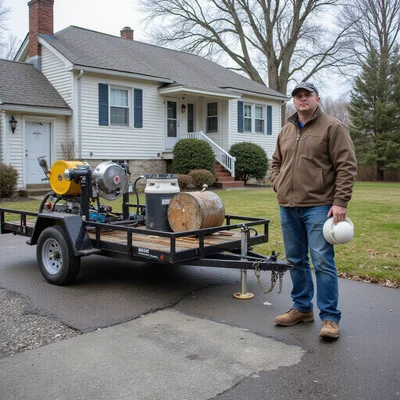
Claude is the founder and owner of CT Pro Concrete Leveling in Berlin, Connecticut. He runs the crew and every free on-site inspection personally across Hartford County, specializing in polyurethane foam lifting for driveways, garage floors, and settling flatwork.
CT Home Improvement Contractor (HIC) Registered