When the Floor Moves, the Door Gets Blamed
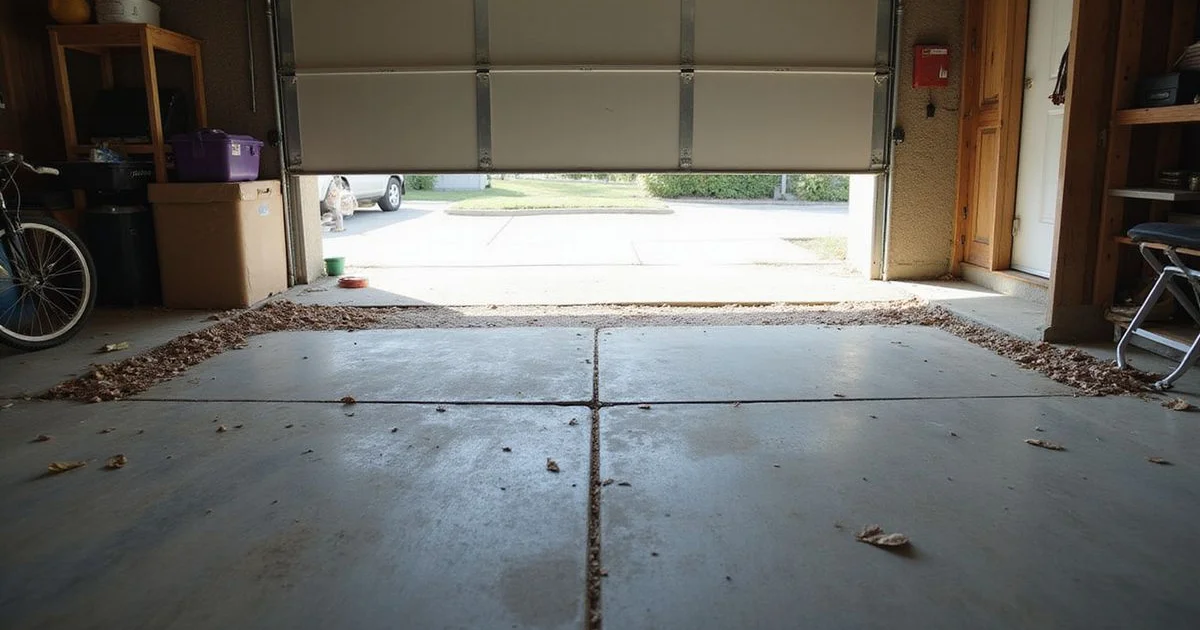
A garage door that stops sealing gets read as a door problem. Most of the time it isn’t. The door is where it was installed, hanging on tracks bolted to the framing. What moved is the concrete underneath it.
A garage door’s bottom seal is a rubber strip designed to compress against the slab at a specific height. The tolerance is small: half an inch of settlement is enough to break contact. Once the slab drops below the seal’s reach, the door closes fully and still leaves daylight. That’s a symptom of the same slab movement covered under garage floor leveling.
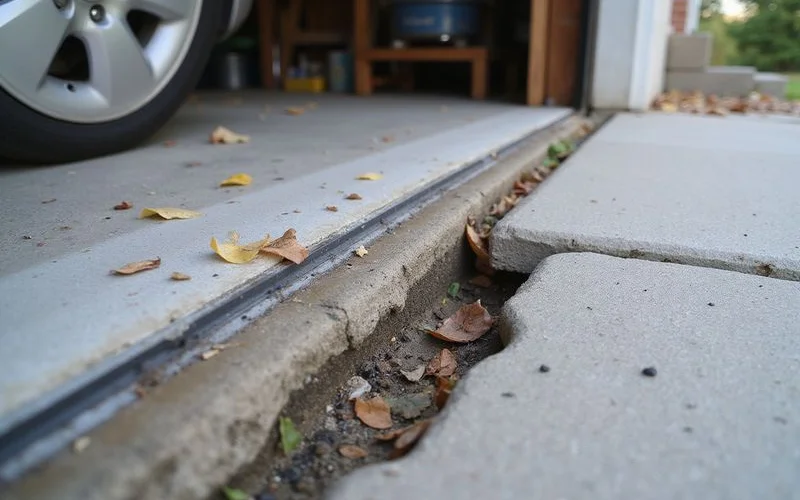
The threshold area drops before the rest of the floor for the same reason the driveway apron does: it sits over backfill, and it takes the most concentrated water. Why garage floors sink covers the underlying mechanism.
The quick diagnostic
Is the gap even across the full width, or wider at one end? A wedge means uneven settlement. An even gap across the whole opening is more likely a door adjustment or a worn seal.
What the Gap Lets In
Weather. Wind-driven rain and snowmelt run straight in. In an attached garage, that also breaks the thermal boundary with the rest of the house.
Water, feeding the cause. This is the part people miss. Water entering under the door line reaches the backfill under the slab, the exact material whose washout created the void in the first place. The gap accelerates the settlement that made the gap.
Pests. A half-inch gap along a full garage opening is an open invitation. Mice need very little.
Debris. Leaves and grit accumulate along the threshold, hold moisture against the concrete, and speed up surface deterioration.
Security. A visible gap under a closed door is a visible weak point.
Telling Floor From Door
Before anyone quotes anything, work out which component actually moved:
- Close the door and look at the gap shape. Even along the whole width points to the door. Wedge-shaped, wider at one end, points to the slab.
- Lay a straight edge across the floor a few feet inside the opening, running parallel to the door. If it rocks or shows daylight underneath, the slab has dipped.
- Check the joint between garage slab and driveway apron. If it has opened up or stepped, both are settling and the diagnosis is settled.
- Look for cracking near the opening. Settlement cracking near the door line confirms a void underneath.
If the floor is level and the gap is even, it’s a door service call: track adjustment, opener travel, or a worn seal. We’ll tell you that rather than take the job.
Bringing the Slab Back to the Door Line
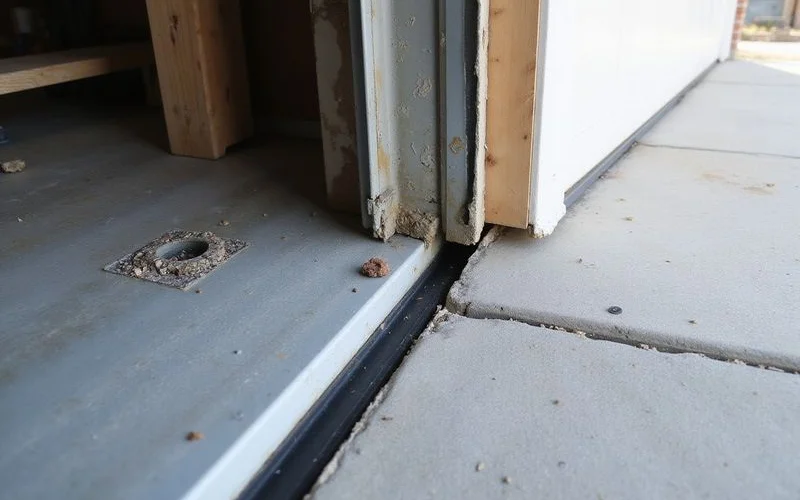
Where the slab is the culprit, the fix is a targeted lift along the threshold. Ports go in near the door line, polyurethane fills the backfill void, and the slab is raised in stages until it meets the seal again across the full opening.
The target here isn’t just “level”. It’s the door line specifically. That means measuring against the threshold as the lift progresses rather than against the middle of the floor. Getting it wrong by even a small margin leaves you with a partial seal.
Sealing the joint afterward is worth doing while everything is open. It cuts the water path that started the settlement, which is the difference between a repair and a delay.
Most threshold lifts are a few hours. The foam cures in roughly 15 minutes, so the door is closing on solid concrete the same day.