Two Methods, Same Goal
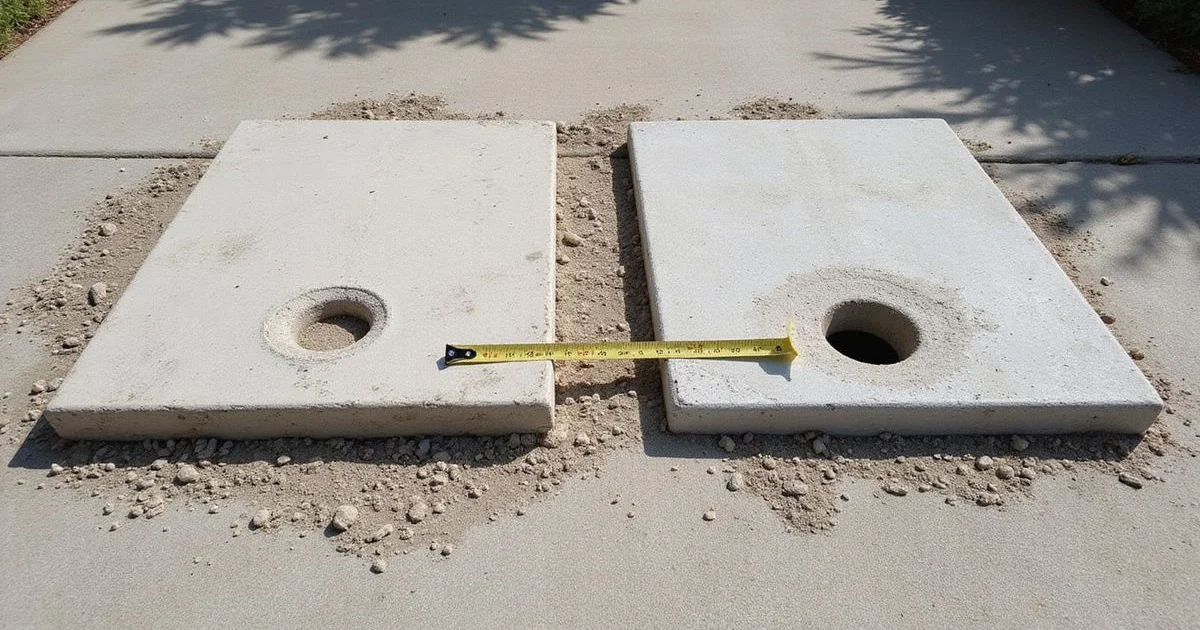
Both mudjacking and polyurethane injection do the same job: fill the empty space under a settled concrete slab and raise the concrete back to grade without removing it. The difference is entirely in what gets pumped underneath and what that material does over the following winters.
Mudjacking, the older of the two, pumps a slurry of cement, soil, sand, and water through holes drilled in the slab. Polyurethane injection, sometimes called polyjacking or foam jacking, pumps a two-part expanding polymer that reacts and cures in place. The step-by-step walkthrough covers the foam sequence in full.
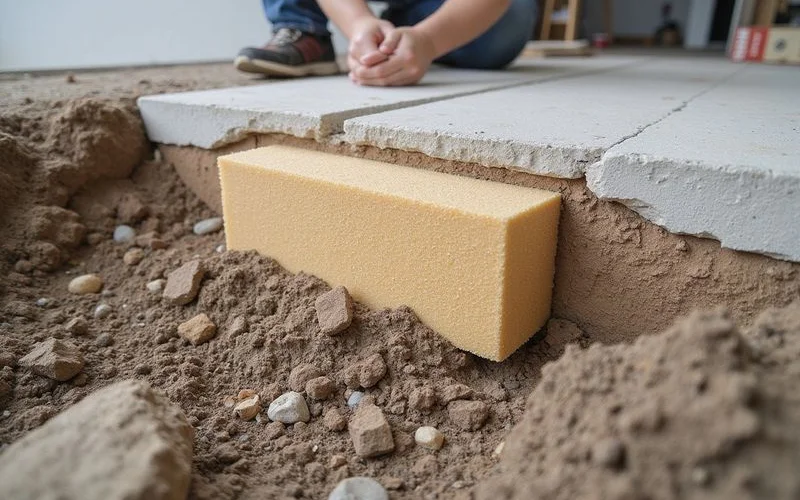
Neither method rescues failed concrete. If the slab is spalled through, cracked full depth, or actively crumbling, both are the wrong answer and a repour is the honest recommendation. Everything below assumes sound concrete that has simply lost its support.
What actually decides it in Connecticut
Water. The freeze-thaw cycle that caused the settlement in the first place is still going to be there next winter, and the question is whether your fill material cares.
Side by Side
| Polyurethane foam | Mudjacking slurry | |
|---|---|---|
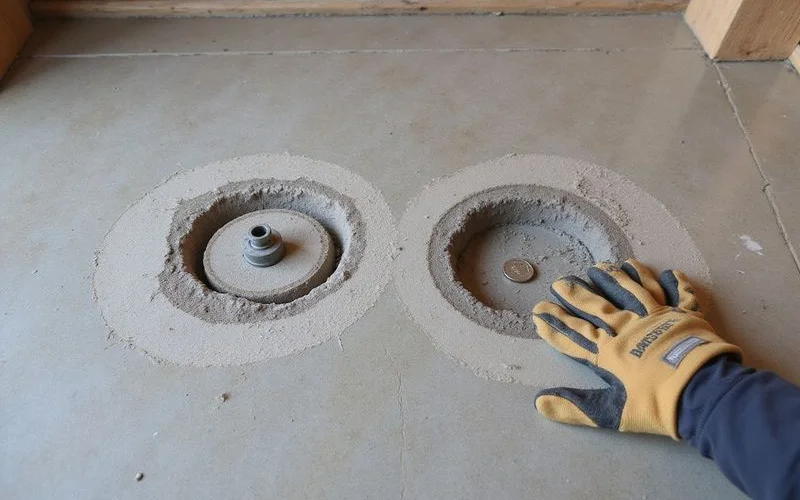
| Hole size | ~5/8 inch, coin-sized | ~1.5-2 inches |
| Cure to working strength | ~15 minutes | Several hours to overnight |
| Weight of fill | Roughly 4 lb per cubic foot | Roughly 100+ lb per cubic foot |
| Water behaviour | Closed-cell, doesn’t absorb, won’t erode | Porous, can wash out over time |
| Precision of lift | High: expansion is controllable in stages | Moderate: harder to fine-tune |
| Surface trace afterward | Small patched dots | Noticeably larger patched holes |
| Best suited to | Residential flatwork, freeze-thaw regions, visible surfaces | Very large low-precision slabs where material cost dominates |
Weight is the underrated one. A cubic foot of slurry weighs somewhere north of a hundred pounds. Polyurethane runs around four. When the reason your driveway dropped is that the soil beneath it couldn’t hold what was already there, adding a ton of new material to that soil is worth thinking about. Foam fills and supports without meaningfully increasing the load.
Water behaviour is the decisive one. Closed-cell polyurethane doesn’t take on water and doesn’t erode. A cement-soil slurry is porous by nature. Where the underlying problem is water moving under a slab every thaw, which is exactly the Connecticut problem, that difference compounds year on year.
Where Mudjacking Still Makes Sense
It would be dishonest to say mudjacking is obsolete. It has been lifting slabs for decades and it still works.
Its case is strongest on very large, low-visibility, low-precision slabs where raw material cost dominates the bill, such as some agricultural and industrial flatwork. Slurry material is cheap. On a job measured in thousands of square feet where nobody will ever look closely at the surface, that arithmetic can favour it.
For a residential driveway, garage floor, patio, walkway, or front stoop in Hartford County, the trade-offs run the other way. You care about the finish, you care about getting your driveway back today rather than tomorrow, and you care about the fix surviving the next decade of freeze-thaw. On all three, foam wins.
Deciding for Your Slab
The method matters less than the diagnosis. Before choosing between them, get a straight answer on two things: is the concrete sound enough to lift, and where exactly are the voids?
A good inspection measures the drop against a fixed reference, probes for cavity depth and extent, and looks at the concrete’s actual condition rather than just its height. That assessment tells you whether you’re looking at a lift or a replacement, and it should be free and in writing either way.
For a settled driveway specifically, driveway leveling sets out the scope, the pricing basis, and what the day looks like.